Description:
The H1 histamine receptor is responsible for mediating hypersensitivity and allergic reactions. Exposure to allergen results in the degranulation of mast cells and basophils, which then release histamine and other inflammatory mediators. Histamine binds to, and activates, H1 receptors, which results in the further release of pro-inflammatory cytokines, such as interleukins, from basophils and mast cells. These downstream effects of histamine binding are responsible for a wide variety of allergic symptoms, such as pruritus, rhinorrhea, and watery eyes.
Fexofenadine is considered an "inverse agonist" of the H1 receptor because it binds to and stabilizes the inactive form of the receptor, preventing its activation and subsequent downstream effects. It has a potent and selective affinity for H1 receptors, and there is no evidence that it carries antidopaminergic, antiserotonergic, anticholinergic, sedative, or adrenergic blocking activity. Fexofenadine does not cross the blood-brain barrier and thus is unlikely to cause significant CNS effects.
Composition:
Each 5 ml oral suspension (OS) contains Fexofenadine Hydrochloride USP 30 mg.
Indication:
Allergic rhinitis: Fexofenadine is indicated for the relief of symptoms associated with seasonal and perennial allergic rhinitis, in adults and children 12 years of age and over. Symptoms treated effectively include sneezing, rhinorrhea, lacrimation, itchy, red eyes and itchy nose/palate/throat. Fexofenadine improves health-related quality of life and work/activity productivity.
Chronic idiopathic urticaria: Fexofenadine is indicated for the relief of symptoms associated with chronic idiopathic urticaria in adults and children 12 years of age and older. Fexofenadine significantly reduces the signs and symptoms of chronic idiopathic urticaria, the number of wheals, and pruritus. Fexofenadine improves health-related quality of life and work/activity productivity.
Dosage & Administration:
Allergic Rhinitis-
Adults and children 12 years and older:
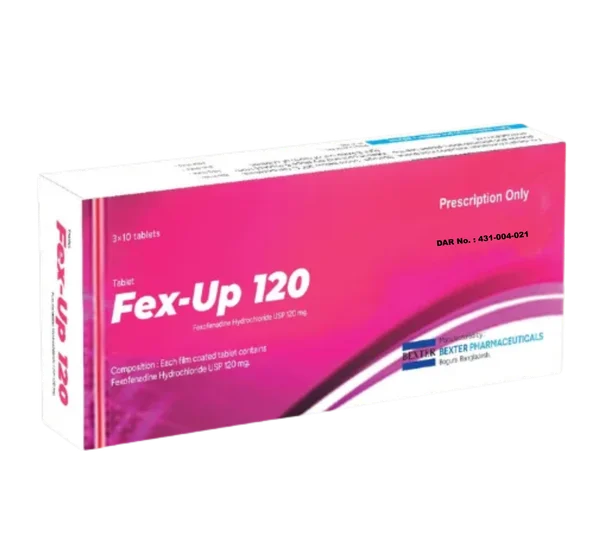
Tablet: 60 mg twice daily or 120 mg once daily or 180 mg once daily
In case of impaired renal function: 60 mg once daily
Children from 6 to 11 years:
Tablet: 30 mg twice daily or 60 mg once daily
In case of impaired renal function: 30 mg once daily
Children from 2 to 11 years
Suspension: 30 mg or 5 ml twice daily
In case of impaired renal function: 30 mg or 5 ml once daily
Chronic Idiopathic Urticaria-
Adults and children 12 years and older:
Tablet: 60 mg twice daily or 120 mg once daily or 180 mg once daily
In case of impaired renal function: 60 mg once daily
Children from 6 to 11 years:
Tablet: 30 mg twice daily or 60 mg once daily
In case of impaired renal function: 30 mg once daily
Children from 6 months to less than 2 years:
Suspension: 15 mg or 2.5 ml (1/2 tsp) twice daily
In case of impaired renal function: 15 mg or 2.5 ml (1/2 tsp) once daily
Children from 2 to 11 years:
Suspension: 30 mg or 5 ml (1 tsp) twice daily
In case of impaired renal function: 30 mg or 5 ml (1 tsp) once daily
Drug Interaction:
Plasma concentrations of Fexofenadine have been increased when given with Erythromycin or Ketoconazole. Antacid containing Aluminium and Magnesium Hydroxide reduces the absorption of Fexofenadine. Fruit juices including grapefruit may reduce the bioavailability of Fexofenadine and use together should be avoided.
Side Effects:
The incidence of adverse events, including drowsiness, is not dose related and is similar across subgroups defined by age, gender and race. The other side effects are Viral like infection (cold, flu), nausea, dysmenorrhea, fatigue, headache and throat irritation.
Contraindications:
Contraindicated in patients with known hypersensitivity to Fexofenadine Hydrochloride or any of its ingredients.
Pregnancy & Lactation:
Pregnancy-
There are no adequate and well-controlled studies in pregnant women. Fenadin should be used during pregnancy only if the potential benefit justifies the potential risk to the fetus.
Nursing mothers-
No adverse effects have been seen in breast feeding infants whose mothers were receiving Fexofenadine Hydrochloride and THE AMERICAN ACADEMY OF PEDIATRICS considers that it is therefore usually compatible with breast feeding.
Pediatric use-
Safety and effectiveness of Fexofenadine Hydrochloride in pediatric patients can be used up to the age of 6 months.
USE IN CHILDREN & ADOLESCENTS
The safety and efficacy of fexofenadine for the treatment of allergic rhinitis in children younger than 2 years of age and chronic idiopathic urticaria in infants less than 6 months of age has not been established.
Storage Conditions:
Store in a cool (below 30°C) and dry place, protected from light & moisture.
This medicine should not be used after the expiry date (EXP) shown on the pack.
Keep all medicine out of reach of children.
Precaution & Caution:
Fexofenadine should be used with caution in patients with hepatic and renal problems. Cautions should be taken for patients with heart disease since fexofenadine may lead to a fast or irregular heartbeat. Fexofenadine is unlikely to affect the ability to drive or operate machineries. It is to be checked that the tablet does not make the patients sleepy or dizzy before driving or operating machineries.
Pack Size:
60 ml Bottle

(0) Reviews: